


Understanding Your Laminate Flooring
The four layers of laminate flooring:
-
Wear layer: A clear protective coating that resists scratches and stains
-
Design layer: High-resolution image mimicking wood, stone, or other materials
-
Core layer: Dense fibreboard providing stability and dent resistance
-
Backing layer: Moisture-resistant material protecting against warping
Different finishes not only affect the appearance of your flooring but also its maintenance requirements.
Common finishes and their properties:
-
Smooth/Glossy: Highly reflective with a polished look, but shows scratches more easily
-
Textured: Features embossed patterns that hide minor scratches and dirt
-
Hand-scraped: Rustic appearance with intentionally aged markings
-
Matte: Low-sheen finish that conceals small imperfections and footprints
To maintain laminate flooring, it is crucial to follow proper cleaning practices. Effective cleaning laminate flooring involves using a vacuum or broom to remove debris, followed by a damp cloth or mop to ensure the surface remains in good condition.

Daily Care Essentials
Daily maintenance doesn’t need to be time-consuming but is crucial for preserving your laminate’s appearance and extending its lifespan.
Daily cleaning routine:
During the cleaning process, use gentle methods to avoid damaging the floor's surface.
Focus on high-traffic zones like entryways, hallways, and kitchens. Use a soft-bristled broom or a microfibre dust mop to gently remove dirt, dust, and debris. These tools are ideal for capturing fine particles without scratching the surface, and regular sweeping helps prevent grit from being ground into the flooring.
If you have pets, be proactive about cleaning up pet hair. Hair tends to accumulate quickly along baseboards, in corners, and under furniture. Use a dry microfibre mop or a vacuum with a soft brush attachment to pick up fur without dispersing it or damaging the floor.
Wipe up spills as soon as they happen to prevent moisture from seeping into the seams of the laminate planks. Use a slightly damp cloth or paper towel to blot the spill, then dry the area thoroughly. Prompt attention not only prevents stains but also guards against swelling or warping caused by excess moisture.
When using a vacuum on laminate floors, proper technique prevents damage to the surface.
Safe vacuuming methods:
-
Use the hard floor setting or turn off the rotating brush
-
Choose a vacuum with suction-only floor attachments
-
Focus on edges, corners, and spaces between planks where dust collects
Spill response protocol:
-
Wipe up immediately with an absorbent cloth or paper towel
-
For sticky spills, slightly dampen a cloth with water and gently clean
-
Dry the surface thoroughly with a clean, dry cloth

Effective Deep Cleaning to Clean Laminate Flooring
Using the right cleaning products is essential for maintaining laminate floors without causing damage over time.
Recommended cleaning solutions:
-
PH-neutral cleaners specifically formulated for laminate flooring
-
Diluted white vinegar solution (one part vinegar to ten parts water)
-
Specialised laminate cleaning kits from trusted manufacturers
Certain cleaning products and tools can seriously damage your laminate and should be avoided entirely.
Products to never use:
-
Steam cleaners (they force moisture into seams)
-
Wet mops or excess water
-
Bleach or ammonia-based cleaners
-
Abrasive scrubbing pads
-
Traditional floor wax or polish
Proper mopping technique prevents water damage while effectively cleaning the surface.
Safe mopping method:
-
Start by thoroughly sweeping or vacuuming to remove loose debris
-
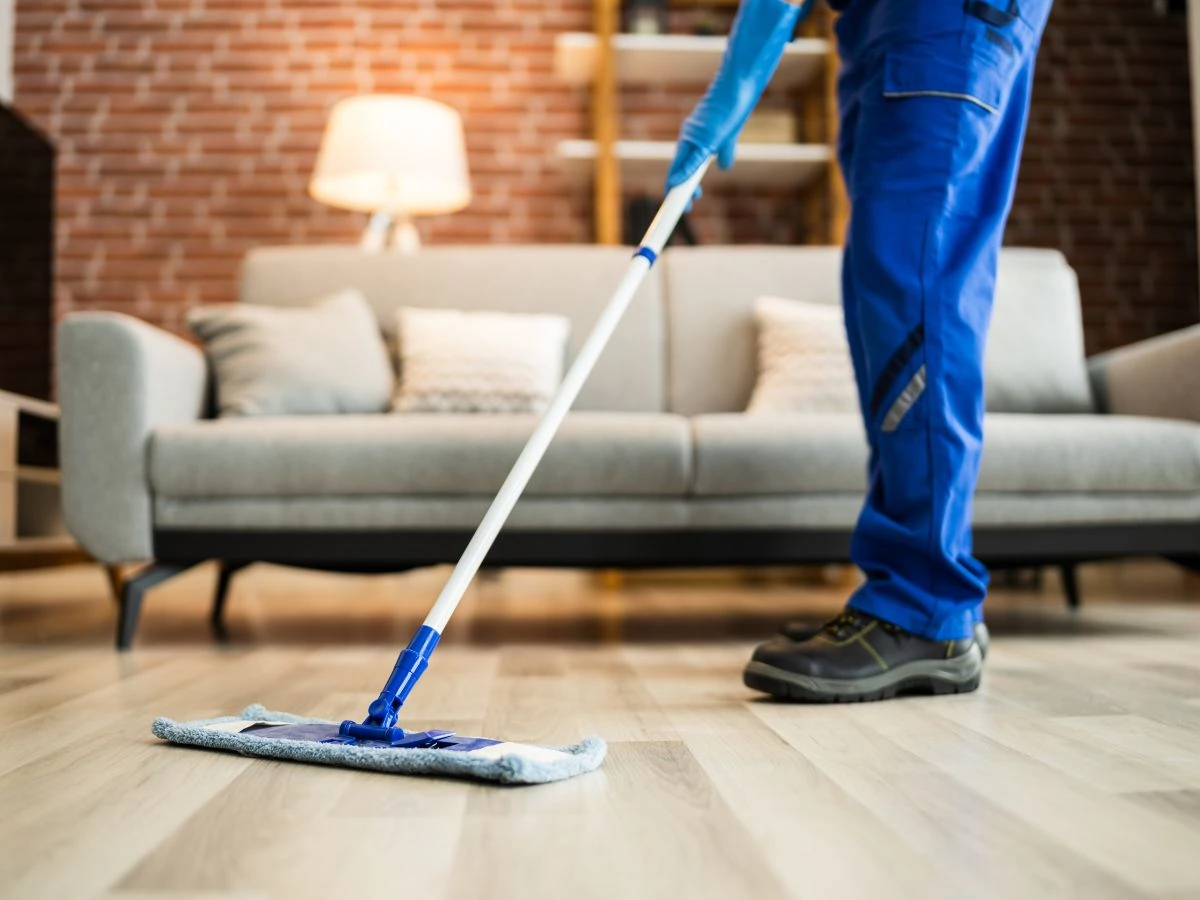
Lightly mist the floor with cleaner or dampen your microfibre mop (it should be barely damp). Use a damp mop to ensure the floor is cleaned without over saturating it.
-
Work in small sections, moving with the grain of the planks
-
Dry each section with a clean towel before moving to the next
Stain Removal Guide
Different types of stains require specific approaches for effective removal without damaging the laminate surface.
How to tackle common stains:
-
Dried mud: Allow to dry completely, vacuum, then wipe with a slightly damp cloth
-
Grease: Apply a small amount of pH-neutral dish soap to a damp cloth, wipe gently, then remove residue
-
Crayon/wax: Let harden, gently scrape with a plastic scraper, then wipe with a slightly damp cloth
-
Scuff marks: Rub gently with a clean tennis ball or eraser-type cleaning pad
-
Tough stains: Use acetone or diluted vinegar sparingly (test in an inconspicuous area first)
-
Shoe polish: Use acetone, paint thinner, or vinegar essence on a cloth to effectively remove shoe polish marks
Making Laminate Floors Shine
Spot cleaning is essential for daily maintenance to keep laminate floors free from crumbs and dirt. This routine helps prevent scratches and maintain shine. Regular sweeping and mopping with a damp cloth are also recommended.

Making Laminate Floors Shine
To keep your laminate floors shining and looking their best, regular cleaning and maintenance are key. Start by sweeping daily with a soft-bristled broom or using a vacuum cleaner designed for hard floors to remove loose dirt and dust. This prevents debris from scratching the surface.
For a deeper clean, occasional damp mopping is effective. Use a microfiber cloth and a cleaning solution made of warm water and a neutral detergent. Ensure the mop is only slightly damp to avoid excess moisture, which can damage the laminate. Avoid using harsh chemicals or abrasive cleaners, as they can dull the finish and harm the surface.

Preventative Maintenance
Preventing damage is always easier and less costly than repairing it. Protecting your laminate from furniture damage is essential for longevity.
Furniture protection essentials:
-
Install high-quality felt pads under all furniture legs to protect laminate flooring
-
Replace pads every 3-6 months as they collect dirt and wear down
-
Use chair mats under office chairs with wheels
-
Consider specialised floor protectors for heavy furniture
Your home’s entryway is the first defense against dirt, moisture, and abrasives that can damage laminate.
Entryway protection strategies:
-
Place absorbent door mats both outside and inside all exterior doors
-
Implement a “no outdoor shoes” policy, especially during wet weather
-
Provide a shoe rack and perhaps house slippers for guests
-
Keep a small brush by the door for sand removal in coastal areas
-
Regularly clean doormats to prevent the accumulation of other debris
The design of laminate collections, featuring long or wide planks and a tight locking system, reduces the accumulation of dirt and dust, thereby contributing to a healthier home environment.
Laminate flooring performs best when indoor climate conditions are properly controlled.
Climate control recommendations:
Maintain indoor humidity between 35-65%, use humidifiers during dry winter months to prevent planks from shrinking. On the flip side consider dehumidifiers or air conditioning during damp summer months.
Daily cleaning routine:
-
Use a soft broom to sweep the floors regularly, preventing a build-up of dirt and dust
-
Vacuum with a soft brush attachment to avoid scratching the surface
-
Wipe up spills immediately to prevent moisture damage
-
Use laminate-specific cleaning solutions for deeper cleaning sessions

Specialised Cleaning
For specialised cleaning of laminate flooring, it’s important to use the right tools and techniques to avoid damage. While a steam mop can be used, always follow the manufacturer’s instructions and avoid excessive moisture, which can seep into the seams and cause warping.
For stubborn dirt or debris, a plastic knife can be used to gently scrape it up. However, avoid using harsh chemicals or abrasive cleaners that can scratch the surface. A microfiber cloth combined with a cleaning solution of distilled white vinegar and water is effective for removing stubborn stains or scuff marks. Simply mix one part vinegar with ten parts water in a spray bottle and lightly mist the affected area before wiping clean.
Avoid using candle wax or other wax-based products, as they can leave a residue on the laminate flooring. For tough stains, use a cleaning agent specifically designed for laminate flooring, following the manufacturer’s instructions carefully.
Conclusion
Laminate flooring has become increasingly popular in UK homes, where its durability stands up well to the region’s weather conditions. This versatile flooring option offers the beautiful appearance of hardwood without the hefty price tag or complicated maintenance requirements. With its impressive scratch resistance, water resistance, and wide variety of styles, it’s no wonder that homeowners across the UK are choosing laminate for every room of the house - whether it’s a kitchen laminate floor, living room laminate flooring, dining room flooring, bedroom laminate flooring, hallway laminate flooring, office flooring or even bathroom laminate flooring when using water-resistant variants.
Proper maintenance of laminate flooring is an investment that pays dividends in both appearance and longevity, keeping your floors looking their best. To maintain laminate flooring, follow the essential cleaning techniques and preventive measures outlined in this guide.
For specific concerns about your particular laminate flooring, consult the manufacturer's guidelines or contact our professionals at Lumber King. Our team understands the unique challenges in your region and can provide personalised advice for your specific situation. Order your free King Size samples today to experience the quality firsthand.
With the right approach and Lumber King's expert support, your laminate floors will continue to enhance your home's beauty and value throughout their lifespan.


